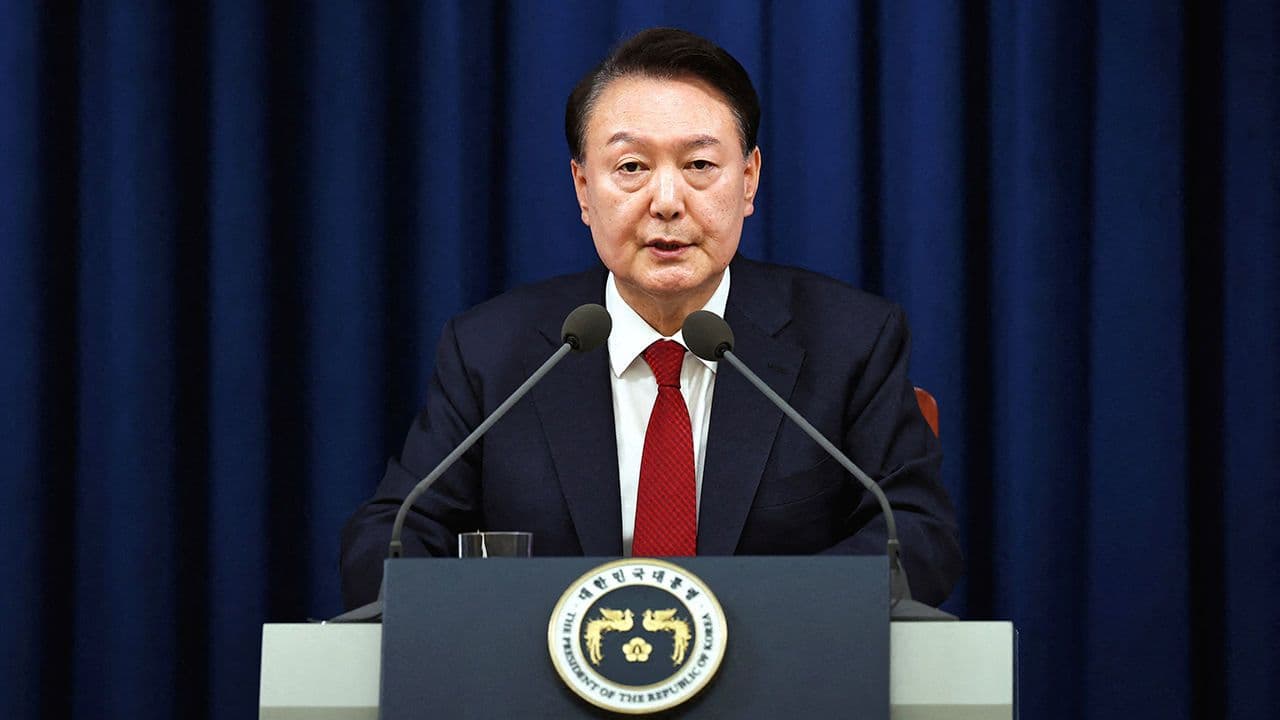
South Korea’s Former President Jailed for Life Over Martial Law Attempt
In a landmark ruling that has shaken the nation, South Korea’s former president Yoon Suk Yeol has been sentenced to life imprisonment for attempting to impose martial law a move the court described as an “insurrection from the top.”
The verdict marks one of the most dramatic political downfalls in the country’s modern history and once again places South Korea among the few democracies where former presidents have faced prison time.
What Happened on December 3, 2024?
On live television, Yoon shocked the nation by declaring martial law. He claimed the decision was necessary to protect South Korea from “anti-state forces” allegedly sympathizing with North Korea.
However, prosecutors argued and the court agreed that the real motivation was domestic political pressure.
At the time:
The opposition-controlled parliament had weakened his authority.
His wife, Kim Keon Hee, was facing corruption allegations.
Political tensions were already at a boiling point.
Military troops were reportedly deployed to seal off the National Assembly, and arrests of politicians were allegedly ordered. Lawmakers forced their way into parliament and overturned the order within hours, preventing a prolonged constitutional crisis.
The Court’s Decision
The Seoul court ruled that Yoon’s actions:
Subverted the constitution
Fundamentally damaged democratic institutions
Created deep national division
Prosecutors had even sought the death penalty. However, South Korea has not carried out an execution since 1997, meaning a death sentence would likely have resulted in life imprisonment anyway.
The judge labeled Yoon the “insurrectionist leader,” though the court did not find sufficient evidence that the martial law attempt had been planned a year in advance.
Yoon showed no visible emotion during sentencing, while outside the courtroom:
Supporters gathered chanting slogans in his favor
Opponents demanded the harshest punishment possible
Security was tight, with around 1,000 police officers deployed to prevent clashes.
A Pattern in South Korean Politics?
South Korea has a long history of prosecuting former presidents. Several ex-leaders have previously been jailed on corruption or abuse-of-power charges only to later receive presidential pardons after serving a few years.
Many political analysts believe the same could eventually happen in Yoon’s case.
But this situation feels different.
Unlike past corruption scandals, this case revolves around an alleged direct threat to democratic governance itself.
A Polarized Nation
Yoon’s short-lived martial law declaration has left South Korea deeply divided.
While his supporters argue he acted within presidential authority to protect national sovereignty, critics say the attempt nearly derailed the country’s democratic system.
The ruling Democratic Party which won the presidency after his impeachment expressed dissatisfaction that the court did not impose the death penalty.
The case is expected to move to the Supreme Court if appealed, meaning the final chapter may still be months away.
What This Means for South Korea
This ruling sends a powerful message:
No leader not even a sitting or former president is above the constitution.
Yet at the same time, the visible polarization shows that legal accountability alone cannot heal political divides.
South Korea now faces a critical challenge: How to restore unity while safeguarding democracy.